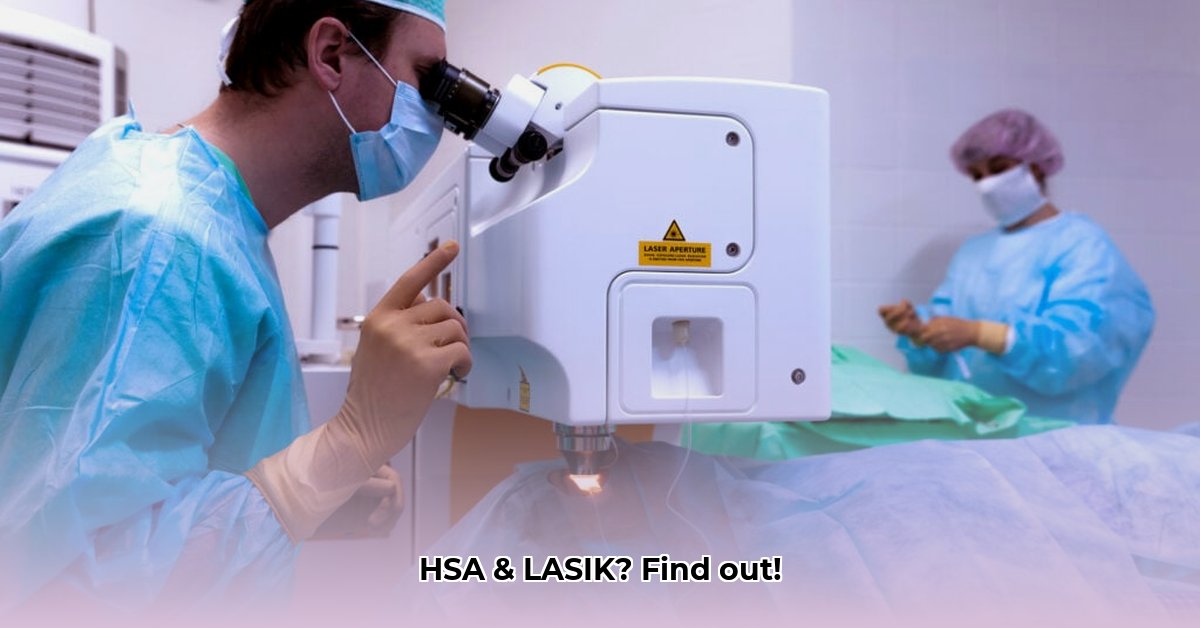
Thinking about LASIK but worried about the cost? Many find the price tag daunting, but there are ways to make this vision-correcting surgery more affordable. Health Savings Accounts (HSAs) and Flexible Spending Accounts (FSAs) can significantly reduce your out-of-pocket expenses. This guide will explain how to use them to pay for LASIK, maximizing your savings in 2024.
Understanding HSAs and FSAs: Your Pre-Tax Healthcare Allies
Before we dive into LASIK specifics, let's clarify what HSAs and FSAs are and how they work. These accounts let you put money aside for healthcare costs before taxes are calculated, resulting in significant savings.
Health Savings Accounts (HSAs): HSAs are like personal savings accounts specifically designed for healthcare expenses. You contribute pre-tax dollars, which grow tax-free. The funds roll over each year, building your healthcare nest egg. To qualify, you must have a high-deductible health plan (HDHP). Crucially, many consider LASIK a qualified medical expense, meaning you can use HSA funds to cover the procedure.
Flexible Spending Accounts (FSAs): Offered through your employer, FSAs let you set aside pre-tax money from your paycheck for eligible medical expenses. However, unlike HSAs, FSAs typically operate on a use-it-or-lose-it basis. Unused funds often expire at the end of the plan year. LASIK coverage under an FSA depends on your employer's specific plan. Always check with your plan administrator.
LASIK and Your HSA/FSA: Eligibility and Reimbursement
The IRS generally considers LASIK a qualified medical expense. This means you can likely use HSA funds for LASIK. However, always verify coverage with your specific HSA plan provider. The rules differ for FSAs; coverage depends entirely on your employer's plan. Contact your FSA administrator directly to confirm LASIK eligibility.
How to Use HSAs and FSAs for LASIK: A Step-by-Step Guide
Here's a practical, step-by-step guide to using your HSA and/or FSA for LASIK financing:
Step 1: Verify Eligibility: First, confirm LASIK is covered under both your HSA and FSA plans (if you have one). Contact your plan administrator for each account, obtaining written confirmation.
Step 2: Maximize Contributions: Once confirmed, contribute the maximum allowed to your HSA and FSA within the annual limits. This maximizes your pre-tax savings before the procedure. Remember, contribution limits change yearly; check the IRS website for current limits.
Step 3: Schedule Your LASIK Procedure: Choose your ophthalmologist and schedule your surgery.
Step 4: Submit Your Claims: After your LASIK surgery, gather all your documentation: medical bills, receipts, and any required forms. Submit these to your HSA and FSA administrators for reimbursement following their instructions.
Step 5: Track Your Reimbursements: Keep a close eye on your account balances and ensure timely processing of your reimbursement requests.
Maximizing Your Savings: The HSA and FSA Combo
Using both an HSA and an FSA simultaneously can significantly lower your out-of-pocket costs. Imagine a \$4,000 LASIK procedure; using \$3,000 from your HSA and \$1,000 from your FSA reduces your direct expense. This is just an illustration. Your savings will depend on your individual plan details, procedure cost, and tax bracket. Is it worth checking whether you are eligible for both?
Calculating Potential Savings
Let's illustrate the potential savings:
| Expense | Payment Source | Approximate Cost | Potential Tax Savings |
|---|---|---|---|
| LASIK Surgery | HSA | $3,000 | Varies by tax bracket |
| Miscellaneous Fees | FSA | $1,000 | Varies by tax bracket |
| Total Cost | $4,000 | Substantial |
Note: Tax savings are highly individualized due to various factors like income tax brackets and state taxes.
Important Considerations
- Contribution Limits: These limits are set annually by the IRS. Keep track of these limits to optimize your contribution strategy.
- Tax Advantages: Remember, HSA contributions are pre-tax deductions, reducing your taxable income, and qualified HSA withdrawals are tax-free. FSA contributions are also pre-tax.
- Professional Advice: Consult with a financial advisor for personalized guidance on maximizing your healthcare savings plan contributions.
Disclaimer
This guide offers educational information and should not be considered financial or medical advice. Always consult with your healthcare provider and a qualified financial advisor before making financial or healthcare decisions. Health insurance regulations and tax laws are complex and subject to change. This information reflects our current understanding but does not constitute legal or financial guidance. Always refer to your specific HSA and FSA plan documents.